What is Yoga Therapy and Could it Help Me?
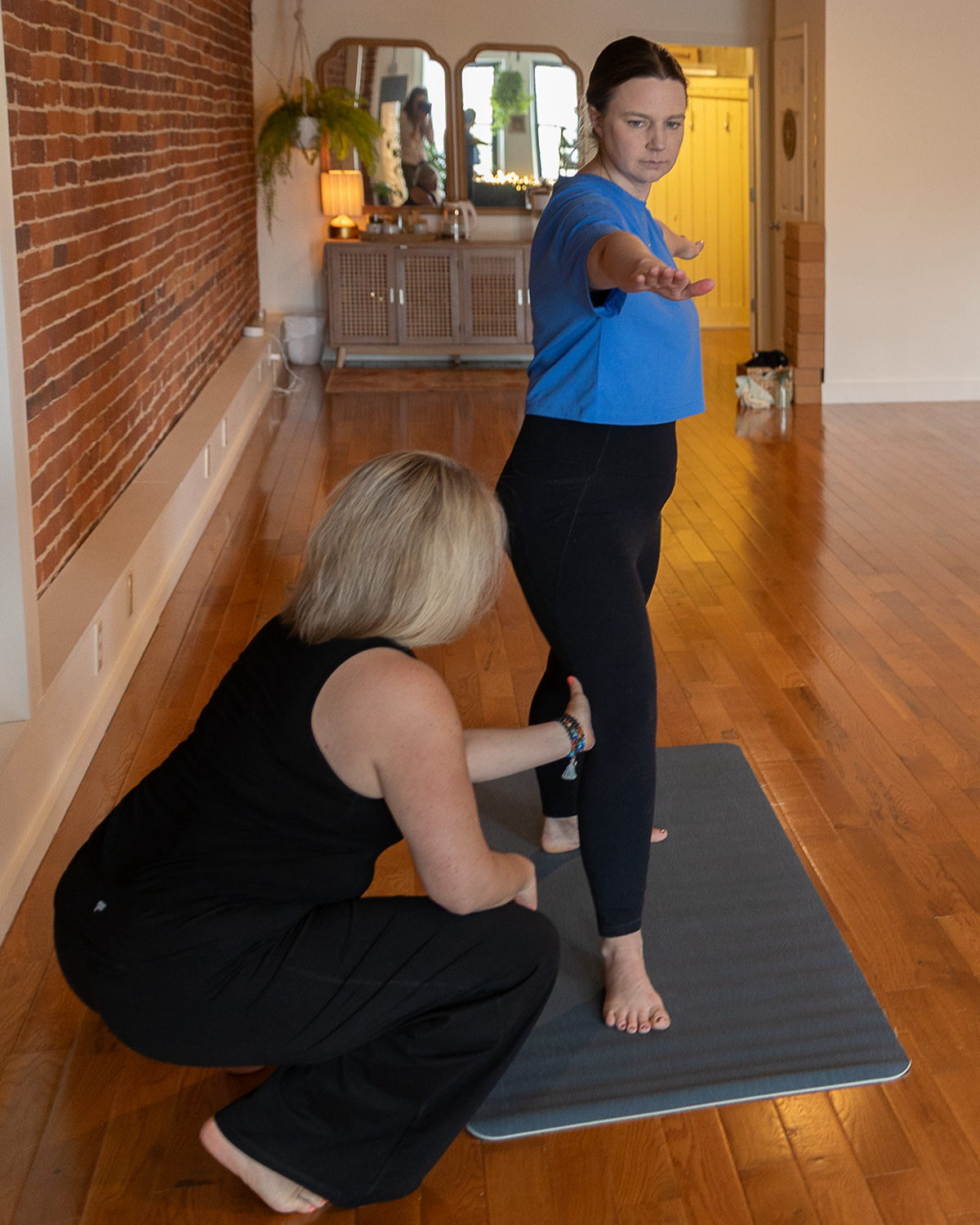
Short answer: Yoga therapy is an individualized approach that uses movement, breathing, relaxation and other yoga practices to support your health and well-being. You do not need to be flexible, physically fit or experienced with yoga to begin.
Most people have a general idea of what happens in a yoga class. Yoga therapy is less familiar, and its name can be confusing. It may sound like physical therapy with yoga poses or like an especially gentle yoga class. It is neither.
Yoga therapy starts with you—not with a predetermined sequence of poses. A yoga therapist considers your health history, current concerns, energy, physical capacity and what you hope will change. From there, practices are selected and adapted to meet your needs.
The goal is not to become “good at yoga.” The goal is to help you feel more comfortable, capable and connected in your own body.
How is yoga therapy different from a regular yoga class?
In a regular yoga class, a teacher guides a group through the same general practice, usually with some modifications. That can be helpful, but the class is not built around one person’s health history or goals.
Yoga therapy is more individualized. A session may include movement, but it could also focus on breathing, rest, body awareness, meditation or simple practices you can use at home.
One person may want to feel safer moving after an injury. Another may be dealing with persistent tension, fatigue or disrupted sleep. Someone else may understand how to manage stress in theory but have difficulty doing it when they are overwhelmed.
The practices do not need to be complicated to be useful. In fact, a short practice you can realistically use is often more valuable than an ambitious routine you will never do.
What can yoga therapy help with?
People seek yoga therapy for many reasons. Some are managing a specific health concern, while others simply feel that their body has been stuck in a pattern they do not know how to change.
Yoga therapy may offer support for people experiencing:
persistent pain or tension;
stress, overwhelm or difficulty settling;
fatigue or disrupted sleep;
reduced confidence after an illness or injury;
fear or uncertainty around movement;
difficulty reconnecting with their body;
the effects of a major life transition;
a need for more individual support than a yoga class provides.
Yoga has been studied for concerns including chronic low-back pain, stress, mood, sleep, balance and quality of life. Results vary, and yoga therapy should not be presented as a cure. It is better understood as one possible layer of support that can be used alongside appropriate healthcare.
Do I have to be flexible or already practice yoga?
No. You do not need to be flexible, fit or familiar with yoga terminology.
A therapeutic practice should meet your body as it is today. Practices can be done standing, seated in a chair, lying down or with support. You should not be expected to force yourself into a pose or keep up with anyone else.
If getting onto the floor, climbing stairs, balancing or changing positions is difficult, ask about accessibility before scheduling. Different practitioners and locations can accommodate different needs.
What happens during a yoga therapy session?
The first session usually includes a conversation about your health history, current symptoms, daily routines and goals. Your yoga therapist may also observe how you breathe and move, but this is not a test and there is nothing you need to perform.
Together, you may explore a few practices and notice how your body responds. The therapist can then help you develop a manageable practice to use between sessions. That practice may change over time as your symptoms, confidence and circumstances change.
Yoga therapy is collaborative. You are not expected to push through discomfort or hand authority over your body to someone else. Your experience and feedback are part of the process.
Can yoga therapy help regulate my nervous system?
The phrase “nervous-system regulation” is used constantly in wellness spaces, sometimes as though the nervous system has a simple on-off switch. It does not.
Movement, breathing, attention and rest can influence how activated, tense or settled you feel. Yoga therapy can help you notice your patterns and discover which practices are supportive for you.
The goal is not to stay calm all the time. Stress and activation are normal and necessary parts of being human. A more realistic goal is to recognize what is happening earlier and have more options for responding.
If you experience significant trauma symptoms, panic, dissociation or another mental-health condition, yoga therapy may complement care from a licensed mental-health professional, but it should not replace it.
Is yoga therapy the same as physical therapy?
No. Physical therapists are licensed healthcare professionals who evaluate and treat movement-related conditions. Yoga therapists do not diagnose medical conditions unless they separately hold a license that allows them to do so.
There may be some overlap in movement, breathing, body awareness and home practice, but the professions serve different purposes. Yoga therapy may be useful after formal rehabilitation has ended or alongside other care when you want continued, individualized support.
Is yoga therapy the same as psychotherapy?
No. Yoga therapists are not psychotherapists unless they also hold the appropriate mental-health license.
Yoga therapy can give you a practical way to work with the physical side of stress, such as muscle tension, restlessness, bracing, fatigue or feeling disconnected from your body. For some people, this supports the work they are already doing in therapy.
Is yoga therapy safe?
Yoga is generally considered safe when practices are appropriately selected and taught by a qualified practitioner. That does not mean every practice is right for every person.
Tell your yoga therapist about relevant health conditions, surgeries, injuries, medications and symptoms. New, severe or unexplained symptoms should be evaluated by an appropriate healthcare professional. A responsible yoga therapist will stay within their scope and refer you elsewhere when needed.
How do I choose a yoga therapist?
Training matters because “yoga therapist” is not a standalone licensed healthcare profession in the United States.
The C-IAYT credential means that a yoga therapist has completed specialized training and met certification standards established by the International Association of Yoga Therapists. It does not mean every certified therapist is experienced with every condition, so ask questions before beginning.
You may want to ask:
What training and certification do you have?
Have you worked with people whose concerns are similar to mine?
What happens during the first session?
How do you decide when someone needs medical or mental-health care?
Are you willing to communicate with my providers if needed?
Is your space accessible for my physical needs?
The relationship matters too. You should feel listened to, respected and able to say when something does not feel right.
How do I know if yoga therapy is right for me?
Yoga therapy may be a good fit if a regular class feels too general, you want support developing a practice around your actual needs, or you are looking for a body-based complement to care you are already receiving.
It may be especially helpful if you feel caught between “I am no longer in active treatment” and “I still do not feel like myself.” That space is real. Healing, confidence and daily function do not always return on the same timeline as medical discharge.
Yoga therapy cannot promise to fix a diagnosis or remove every symptom. What it can offer is time, individual attention and practical ways to work with your body rather than feeling as though you are constantly fighting it.
The bottom line
Yoga therapy is not about achieving difficult poses. It is an individualized process that may include movement, breathing, relaxation, meditation and self-observation, depending on what is appropriate for you.
At its best, yoga therapy helps you better understand your own patterns, build confidence and develop practices that fit into your real life. It works alongside appropriate medical and mental-health care, not in place of it.
Interested in exploring yoga therapy?
I offer individual yoga therapy virtually and at Sanctuary Yoga & Wellness in Exeter, New Hampshire. My work is especially suited to adults who are navigating persistent stress or tension, rebuilding confidence after illness or injury, or finding that a regular yoga class does not provide the individual support they need.
This article is for educational purposes and is not medical or mental-health advice