Sharon Gordon Sharon Gordon

Why I Don’t Offer “All Levels” Yoga Classes (And Why That’s a Good Thing)

“All Levels” sounds welcoming. In reality, it often isn’t. At Sanctuary, intentional class levels ensure students are met where they are safely, respectfully, and without pressure.
By Sharon Gordon, Sanctuary Yoga & Wellness

If you’ve been in the yoga world for a while, you’ve probably seen “All Levels” or “Everybody Welcome” in class descriptions. And truly, I do believe yoga is for every body. Every age, every background, every stage of life, every level of experience, and every nervous system state. But believing everyone is welcome is very different from pretending everyone’s needs can be met in a single class. That’s why Sanctuary doesn’t offer “All Levels” classes. Not because I’m exclusive. Not because I’m gatekeeping. But because I’m committed to creating spaces where people can actually feel safe, successful, and supported, not overwhelmed, discouraged, or at risk of getting hurt.

As both a yoga therapist and a licensed PTA trained in outpatient orthopedics, my job is not to impress people with complicated sequences. It’s to protect their bodies and help them feel at home in themselves again. And in my experience, and in the research, true healing requires clarity, pacing, and the right level of challenge. “All Levels” rarely provides that.

Why “All Levels” Often Misses the Mark

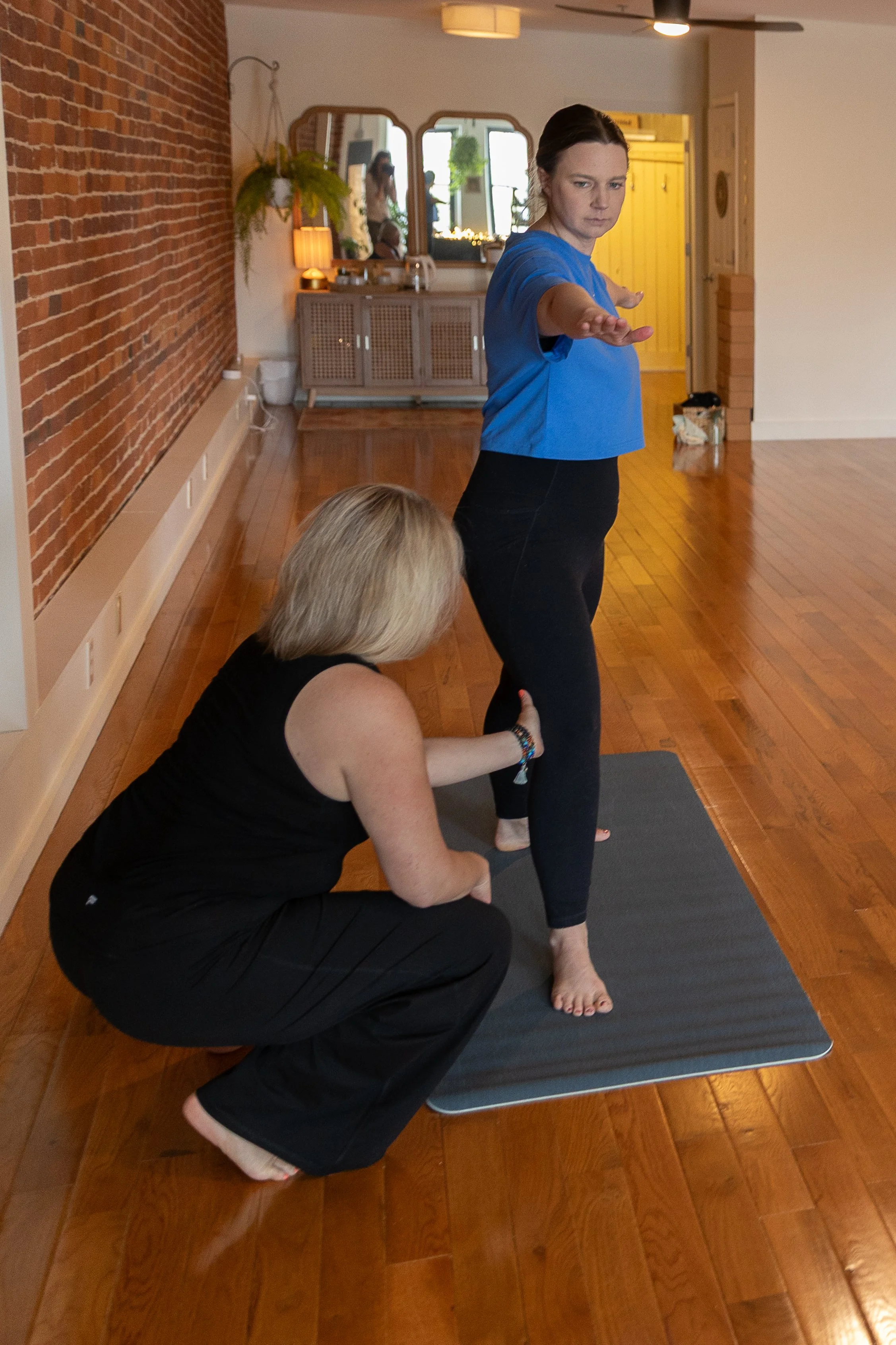
When I taught in studios where all-levels classes were the norm, I constantly found myself torn. A person recovering from surgery or managing chronic pain might walk in because their provider suggested yoga. Someone brand new to yoga might arrive, hopeful but unsure. And right behind them, an experienced practitioner would show up ready for a strong, breath-led flow. These three bodies, experiences, and movement histories cannot and should not be asked to do the same practice.

To pretend they can is not inclusive. It’s unsafe. And it can unintentionally make people feel like something is wrong with them when they inevitably struggle. I could modify until I ran out of oxygen, but someone always left overwhelmed, confused, or disappointed and someone else was pushed beyond their capacity. That never sat right with me. And now that I have my own studio, I simply won’t put people in that position.

Why Differentiated Levels Are More Inclusive, Not Less

Clear, intentional class tiers actually support inclusivity. They help people choose a class that aligns with their comfort and capacity, build confidence in a supportive way, feel successful rather than discouraged, and progress gradually without feeling rushed or left behind. This isn’t about hierarchy- it’s about nervous system regulation, motor learning, injury prevention, and psychological safety.

Research shows that people learn movement best when the challenge matches their abilities; overly intense demands can activate stress responses that reduce coordination and increase risk of strain; feeling unsafe or overwhelmed can shut down the brain regions needed for learning; and healing requires a regulated, supportive environment. In other words, a class that’s too challenging doesn’t make you stronger, it makes you tense and frustrated. A class that feels appropriate doesn’t “baby” you, it gives your body and nervous system room to build a strong, healthy foundation.

How Sanctuary Structures Classes Intentionally

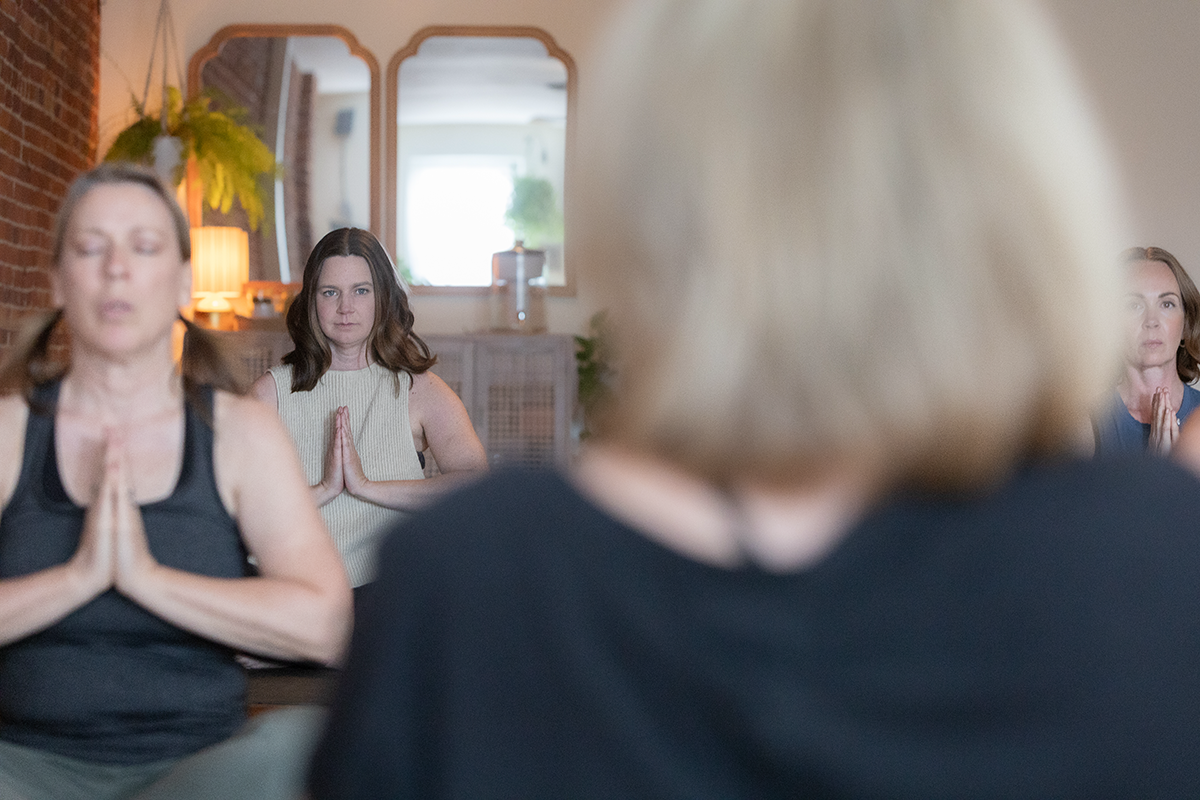
This is why Sanctuary offers three clear class levels, each with a purpose. Gentle + Meditation (Level 1) offers a grounding, therapeutic space for those healing, recalibrating, or new to yoga. A place for foundations, mobility, and nervous system regulation. Slow Flow (Level 2) bridges the gap between gentle and more active yoga, offering mindful movement, standing work, and accessible strength building. Flow (Level 3) is a steady, breath-led practice for those wanting mindful heat and stamina without pressure or performance. Each level honors where someone is in their body and their life, and supports them without pushing them into a space that doesn’t feel safe.

Intentional ≠ Exclusive

I want to be clear and honest: Sanctuary is a welcoming space for anyone whose needs can be safely supported within the physical layout of the studio and the scope of the classes I offer. Because the studio is located upstairs, and because group classes have certain movement requirements, there are some mobility or medical situations that truly require more individualized support than a group setting can safely provide.

And I want to say this gently: it would be incredible if yoga were accessible to every single person, in every body, in every circumstance. I wish I could offer that right now. One day, as Sanctuary grows, I hope to expand in ways that allow more people with different needs to experience this kind of healing environment. But every studio has to begin somewhere.

For me, inclusivity means that within the group of people I can responsibly and safely serve, everyone is treated with respect, compassion, and care. It means no one is pushed beyond their capacity. It means people aren’t made to feel “behind,” “not enough,” or like they’re supposed to keep up with something that doesn’t honor their body.

Group yoga simply isn’t one-size-fits-all, and pretending otherwise can be discouraging or unsafe for those who actually need a different level of support. Offering clear class levels is one way I help ensure that each person who walks into Sanctuary and is able to participate safely can practice in a space that feels approachable, supportive, and appropriate for their nervous system, their history, and their goals.

My hope is that everyone who comes through the door feels seen, supported, capable, and empowered to move at their own pace. That is inclusivity. That is accessibility in practice. And that is trauma-informed care.

A Final Thought for Anyone Who’s Struggled in a Yoga Class

If you’ve ever walked into an all-levels class and felt lost, frustrated, or ashamed, please hear this: there is nothing wrong with you. You were simply in the wrong container. Your body isn’t the problem. The structure was. And at Sanctuary, the structure is intentional so you can feel successful, supported, and safe every time you walk through the door.

Read More
Sharon Gordon Sharon Gordon

It’s Not Magic, It’s Safety: How the Nervous System Shapes Healing

It’s not magic, it’s safety. Sanctuary was born from a lifetime of learning how to create calm where there wasn’t any, and how safety itself becomes the foundation for healing.

by Sharon Gordon, C-IAYT | Sanctuary Yoga & Wellness, Exeter NH

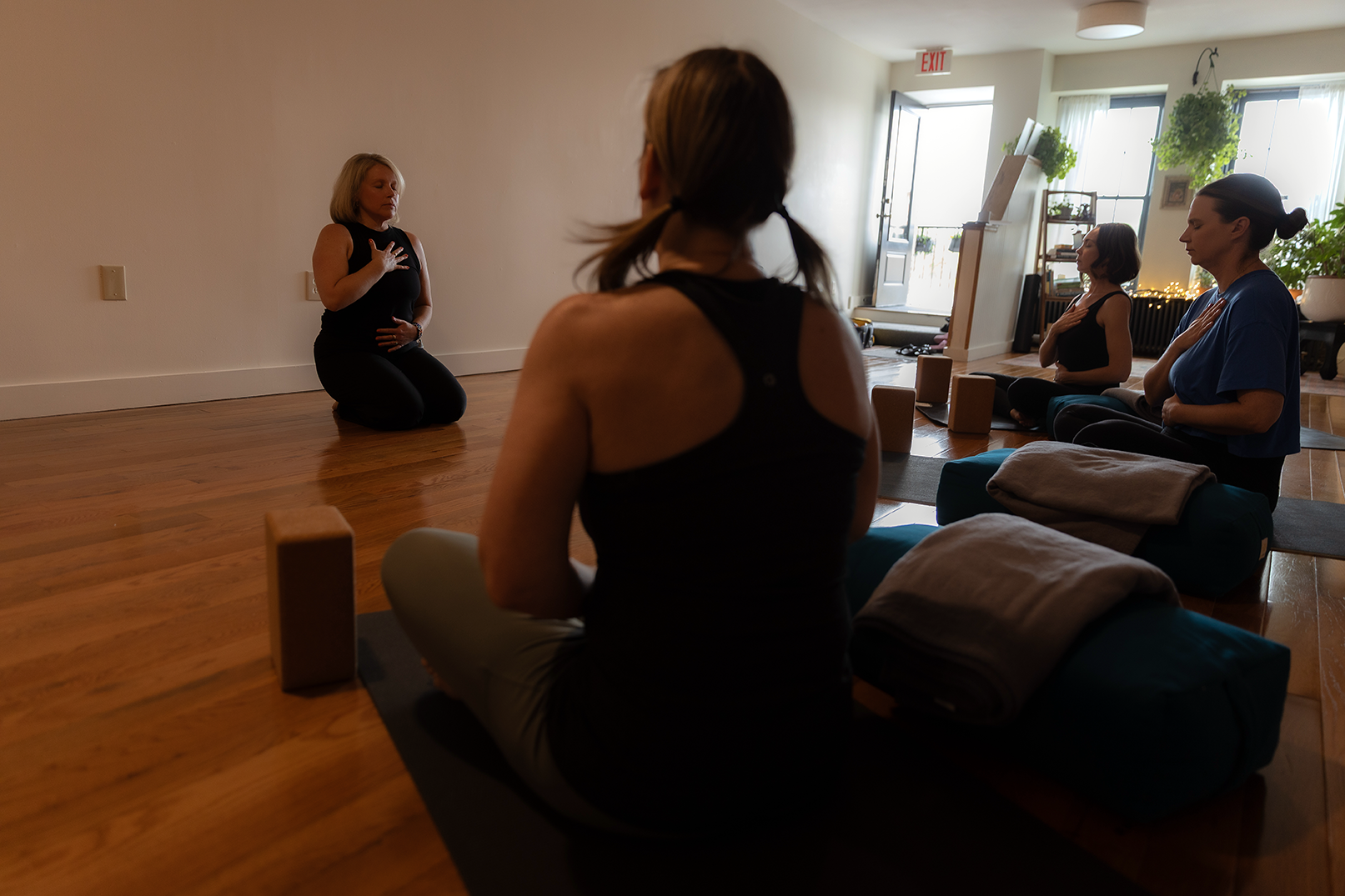
Over the past few months, several people have commented on the “vibe” at the studio and how the space feels calm, grounded, and healing the moment they arrive. I’ve heard words like peaceful, sacred, even magical. And while I’m deeply grateful every time someone says it, what they’re really feeling isn’t magic at all, it’s safety.

That sense of safety didn’t happen by accident. It’s something I began creating long before I ever had a yoga studio.

I didn’t grow up in a home that felt calm or emotionally safe. My parents were loving in their own ways, but they were also deeply hurt people who didn’t have the tools to offer what they never received themselves. So I learned early how to regulate my own nervous system by building small, sanctuary-like spaces wherever I could.

As a teenager, I’d light candles in my bedroom or take late-night drives with the heat on in my car, listening to Delilah on the radio - anyone remember her? That soothing voice and gentle music made me feel grounded in a way nothing else did.

Looking back, I can see that those small rituals were the beginnings of nervous system repair. Imperfect, but instinctive. I was learning to create safety where there wasn’t any.

Those moments became my first lessons in nervous-system regulation, though I didn’t have those words yet. What I understand now, through both yoga therapy and Polyvagal-informed practice, is that healing always begins with safety.

When the nervous system senses danger, even subtle, emotional, or environmental cues, it shifts into protection. When it feels safe, it can finally release, restore, and heal. That truth lives at the center of everything we do at Sanctuary Yoga & Wellness.

I built Sanctuary for others but also for myself. Teaching this work continues to be part of my own healing.

Every time I see a student modify a pose to meet their body’s needs or reach for a blanket to support themselves, I’m reminded of what real healing looks like. It’s not about performing the perfect posture. It’s about listening inward, honoring yourself, and allowing your body to feel safe enough to soften.

True yoga isn’t about performance; it’s about creating a relationship with the body that feels trustworthy. When the body feels safe, the mind follows. From there, movement, breath, and stillness become medicine, not tasks to complete but doorways into healing.

About Sanctuary Yoga & Wellness

Located in Exeter, New Hampshire, Sanctuary Yoga & Wellness offers healing-focused yoga, Ayurveda, and yoga therapy for nervous system regulation, stress relief, and sustainable well-being. Every class is designed to help students reconnect with their bodies, balance effort with ease, and cultivate resilience from the inside out.

Read More
Sharon Gordon Sharon Gordon

A Different Approach to Yoga

Yoga is often understood as a form of exercise or stretching, and many people in our community first come to it hoping it will help them feel more calm or physically better. But what many people are experiencing today, chronic stress, pain, exhaustion, emotional overwhelm, or the sense of being “on alert” is rooted in the nervous system. When the nervous system is dysregulated or depleted, the body can feel tense, foggy, anxious, shut down, restless, or simply tired in a way that rest doesn’t seem to resolve.

This is where Sanctuary’s approach is different.

The work we do here is informed by yoga therapy, which looks at the whole person—not just the physical body or the movements of a class. It considers how the breath, nervous system, past experiences, energy patterns, and daily life shape how we feel and how we move. A certified yoga therapist completes over 800 hours of specialized training in this therapeutic application of yoga, which is distinct from the training designed to teach general yoga classes. The emphasis is on understanding the person in front of us rather than teaching toward a preset sequence or performance of postures.

My own foundation includes a background in physical therapy and training in Ayurveda. This means the lens here is both anatomical and energetic, clinical and intuitive, grounded in structure as much as in the subtler layers of how we experience ourselves. The focus is always to support the body in coming out of a protective pattern, not by pushing or fixing, but by helping the system feel steadier, safer, and more connected.

This is reflected in how our classes move. The pace is slower. The instructions are spacious. There is room to notice, to integrate, to respond rather than react. The shape of the pose matters less than the quality of breath and the state of the nervous system. Yes, strength is built, but from a place of steadiness rather than strain. Rest is not the reward at the end; it is woven throughout as a necessary part of recalibration.

For some people, this looks like gentle, grounding practice. For others, it looks like slow, intentional strengthening. For others still, it looks like rebuilding trust in movement after pain or stress. There is no hierarchy to these. They are simply different expressions of the same underlying principle: that the body heals when it feels safe enough to do so.

Sanctuary exists as a response to the pace, intensity, and pressure that many people feel both in life and, surprisingly, in wellness spaces. It is meant to be a place where nothing needs to be proven, where effort is measured in attunement, and where the nervous system is considered a central part of health, not an afterthought.

This may feel very different from what people expect when they think of yoga. That’s the point.

Read More
Sharon Gordon Sharon Gordon

When Rest Brings Exhaustion: What It Taught Me About Healing

We were supposed to spend the weekend hiking in the mountains, but the weather had other plans. Strong winds and driving rain kept us tucked inside my sister’s cozy cabin instead. Disappointing? Yes, but definitely not a bad Plan B.

The fire was crackling, the tea was warm, the snacks were plentiful, and for the first time in a long time, there was nowhere to be and nothing that needed my attention.

I expected to feel refreshed, but instead I was completely exhausted. My body ached, my energy dropped, and for a day or two I felt heavier than I had in months.

The Spiral of Healing

The old me would’ve seen that fatigue as a kind of failure and proof that I wasn’t strong enough. But what I’m slowly learning is that healing isn’t linear; it’s a spiral and each time we circle back, we meet ourselves again only a little softer, wiser, and more aware.

What I was experiencing is known as the letting-down effect. This is when the body finally recognizes it’s safe and shifts from constant “doing” into “resting and repairing.” After long stretches of stress or responsibility (even the good kind), our systems run on adrenaline and cortisol. When we finally slow down, those hormones drop, the nervous system recalibrates, and the body begins to process what it’s been holding.

It can feel like exhaustion, heaviness, or even sadness, not because something’s wrong, but because the body finally has permission to rest.

When this happens, the most supportive response isn’t to push through, but to acknowledge what’s surfacing, soften around it, and meet it with compassion. Gentle movement, stillness, and nourishment all help the body re-establish balance. Not through striving, but through allowing.

This weekend reminded me exactly why I created Sanctuary Yoga & Wellness - for myself, and for people like me who need a place to land when the letting down begins. A space where rest is honored as part of healing, and where we rebuild steadiness not through control, but through wise effort, compassion, community, and trust.

An Ayurvedic Lesson from the Mountains

Sunday morning, one of my sisters made a lovely breakfast of warm oatmeal with sautéed apples in ghee with cinnamon, nutmeg, and a drizzle of local maple syrup. Simple, comforting, grounding and it was exactly what I needed. After all that holding and releasing, it was medicine.

In Ayurveda, ghee isn’t just rich and delicious, it’s considered an anupana, a carrier that helps deliver the healing qualities of spices like cinnamon and nutmeg deep into the tissues. The warmth, moisture, and gentle sweetness balance the light, cool, and mobile energy of autumn, helping the body feel nourished, rooted, and safe.

That morning reminded me that small rituals of nourishment are as essential to healing as movement or rest. A warm, spiced breakfast can be a form of self-care and a quiet reminder that grounding doesn’t always require stillness; sometimes it begins with how we feed ourselves.

Sanctuary and Wise Effort

This is the heart of Sanctuary, where yoga therapy and Ayurveda meet, and where healing becomes a living, breathing practice. Here, we honor both stillness and movement, rest and wise effort, the kind that builds strength without strain and steadiness without force.

Whether you join us for a Gentle + Meditation class, a Slow Flow class, a heat building Flow class or an educational series, our aim is the same: to help you find balance at every level of being. You’re always welcome here, exactly as you are.

About the Author

Sharon Gordon is a certified Yoga Therapist (C-IAYT), Licensed Physical Therapist Assistant, and Ayurvedic Health Counselor. She is the founder and guide of Sanctuary Yoga & Wellness in Exeter, New Hampshire. A boutique studio dedicated to nervous-system healing, yoga therapy, and holistic well-being. Through classes, workshops, and integrative programs, Sharon blends modern science with timeless yoga and Ayurvedic wisdom to help students cultivate steadiness, resilience, and inner peace.

Read More