
YOGA THERAPY AT SANCTUARY YOGA & WELLNESS IN EXETER, NH
Helping patients translate clinical care into meaningful change.
C-IAYT Certified Yoga Therapist • Licensed Physical Therapist Assistant • Outpatient Orthopedic Experience • 25+ Years of Yoga Experience

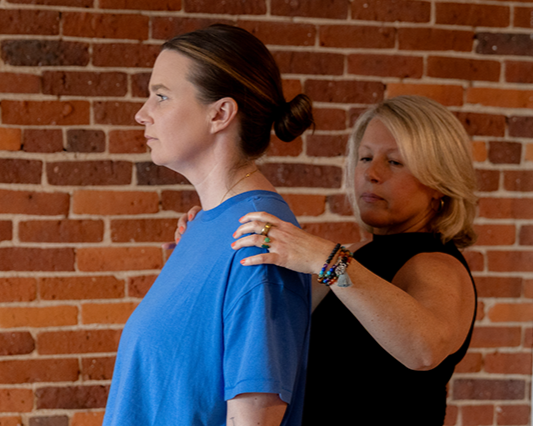
A practical bridge between clinical care and embodied change.
Individualized, body-based support for adults navigating persistent pain, injury recovery, stress, anxiety, sleep disruption, and nervous system dysregulation.
Yoga therapy is designed to complement medical, rehabilitative, and mental health care, not replace it.
Seeking yoga therapy for yourself?
Your patient may benefit from yoga. But the type of yoga matters.
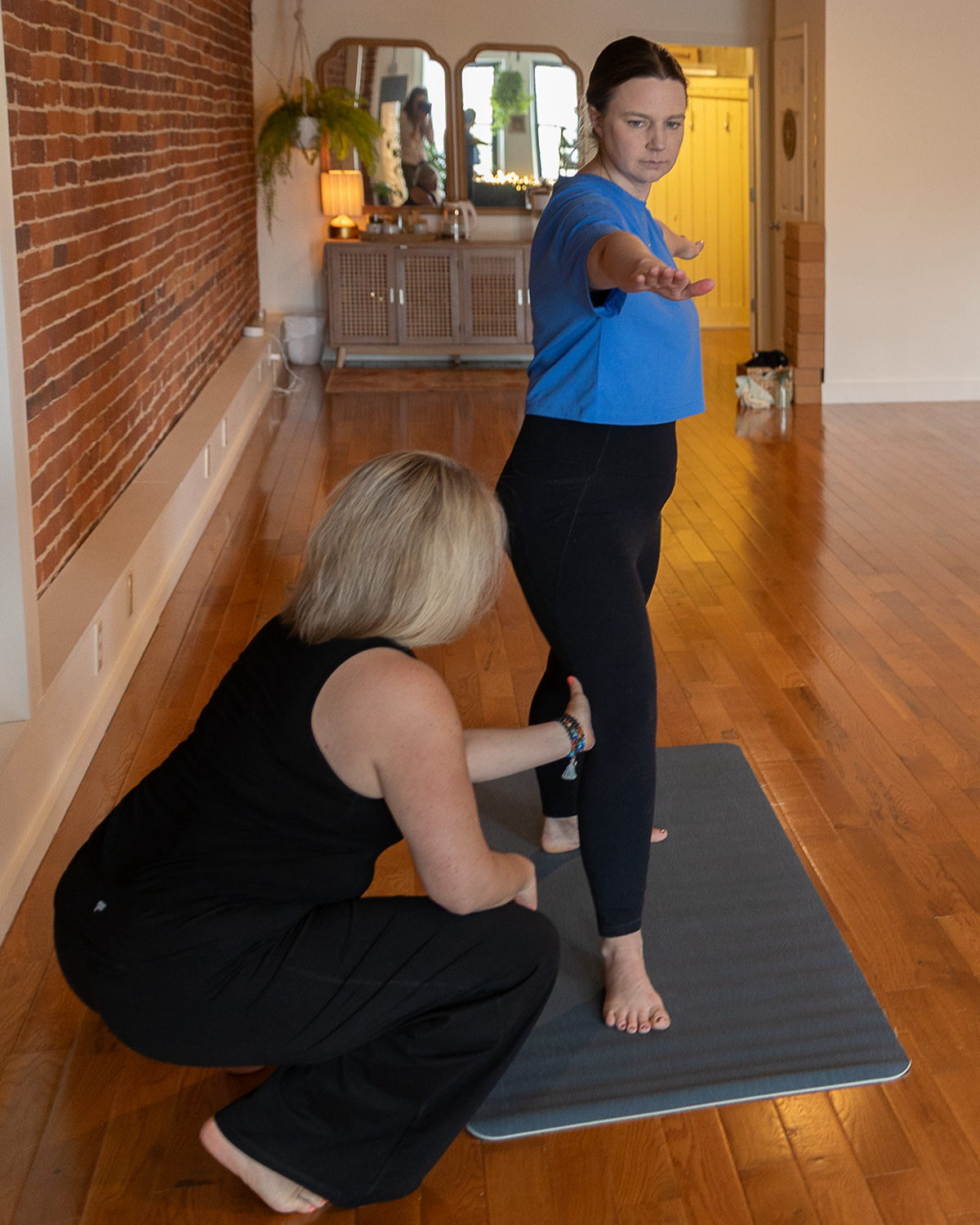
Many patients are told to “try yoga”.
But yoga is not one standardized practice, and not every class is designed to be therapeutic.
Yoga classes vary widely in pace, intensity, purpose, teacher training, class size, and the level of individual support available. A physically demanding or performance-oriented class may not be appropriate for someone experiencing persistent pain, fear of movement, fatigue, anxiety, or a complex health history.
Yoga therapy begins with the person, not the pose.
Practices are selected and adapted according to the individual’s symptoms, goals, physical function, capacity, health history, and response.

Why Yoga Therapy?
Yoga therapy works through both top-down and bottom-up pathways, using attention and awareness alongside movement, breath, and sensory input from the body.
Rather than separating physical function from nervous system regulation, yoga therapy addresses them together. Depending on the individual, sessions may incorporate:
Therapeutic movement, strength, mobility, and balance
Breath practices and breathing-pattern awareness
Sensory awareness and nervous system regulation
Pacing, rest, and recovery strategies
Personalized practices that can be used between sessions
The goal is not to achieve advanced postures. The goal is to help the individual build greater function, regulation, confidence, and capacity in daily life.
Physical Health Referrals
Yoga therapy may be appropriate for patients who are:
Living with persistent musculoskeletal pain
Recovering from injury or rebuilding capacity after rehabilitation
Experiencing reduced mobility, balance, strength, or confidence
Avoiding movement because of pain or fear of reinjury
Struggling to translate exercise recommendations into regular practice
Looking for an appropriately adapted alternative to a conventional yoga class
Who May Benefit From Yoga Therapy?
Mental Health Referrals
Yoga therapy may be appropriate for patients who are:
Experiencing anxiety, chronic stress, or nervous system overwhelm
Having difficulty settling, resting, or downshifting
Feeling disconnected from or uncomfortable in their bodies
Experiencing stress-related physical symptoms
Able to understand concepts cognitively but needing support experiencing them physically
Looking for structured body-based support alongside psychotherapy
Yoga therapy is an adjunctive service and is not a replacement for medical evaluation, physical therapy, psychotherapy, or crisis mental health care.
Seeking yoga therapy for yourself?
Two Pathways to Begin
Individual Yoga Therapy
One-to-one sessions are tailored to the individual’s goals, symptoms, physical capacity, health history, and current needs.
Sessions may be scheduled weekly, biweekly, monthly, or at another interval based on the level of support needed. This pathway is well suited for individuals who:
Need close guidance and individual adaptation
Are not currently ready for group classes
Have more complex physical or nervous system needs
Want to focus on a specific concern or goal
Therapeutic Membership
Preferred pathway for ongoing support
The Therapeutic Membership combines one private therapeutic session each month (additional sessions can be added at a discounted rate) with unlimited access to Sanctuary’s small-group yoga classes.
This option was created to give clients a consistent place to reinforce the movement, breathing, pacing, body-awareness, and regulation skills introduced during private sessions.
I teach the majority of the group classes, and class sizes are intentionally small. Although group classes are not one-to-one treatment, the setting allows me to offer appropriate options, modifications, and pacing support while clients develop consistency and confidence.
Private sessions provide individual direction. Small-group classes provide repetition, continuity, and supported practice.
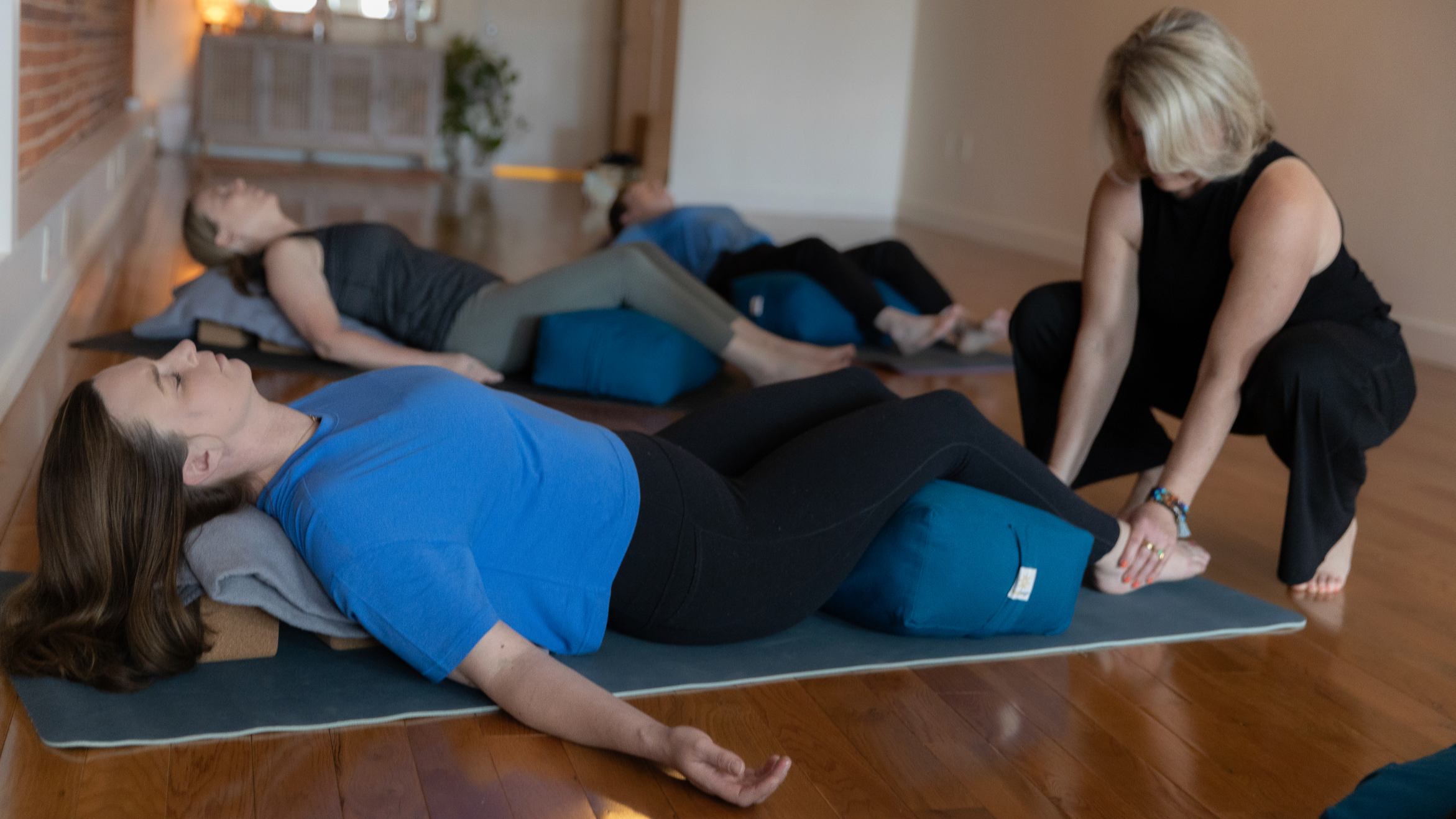
Yoga teacher and yoga therapist are not interchangeable.
C-IAYT is a professional certification specific to yoga therapy. It reflects specialized education and preparation in the individualized therapeutic application of yoga, not simply training to lead general group classes.

Why Work With Sharon?
C-IAYT Certified Yoga Therapist with advanced training in the therapeutic application of yoga
Licensed Physical Therapist Assistant with clinical experience in outpatient orthopedics
25+ years of yoga experience
Background in rehabilitation, biology, and sports medicine
Individualized support for movement, function, pain, and nervous system regulation
Ayurvedic Health Counselor
Sharon brings the clinical literacy of outpatient rehabilitation together with the specialized scope of yoga therapy. Her approach is individualized, collaborative, and designed to complement the care a patient or client is already receiving.
Common Questions
-
Yoga therapy is the individualized application of yoga practices to support a person’s specific health needs, functional goals, and capacity. Sessions may include therapeutic movement, breath practices, sensory awareness, guided rest, and nervous system regulation rather than a predetermined sequence of poses.
Yoga therapy is intended to complement, not replace, medical, rehabilitative, or mental health care.
-
A general yoga class teaches a shared practice to a group. Yoga therapy begins with the individual—their health history, symptoms, movement capacity, nervous system response, goals, and current level of function.
Practices are selected, adapted, and progressed according to how that person responds. The objective is not advanced posture performance; it is greater function, regulation, confidence, and capacity in daily life.
-
Sanctuary uses HIPAA-compliant systems and privacy practices for intake, documentation, and communication. Patient information is shared with referring providers only with written authorization, except when disclosure is required by law.
-
Not necessarily. Yoga varies widely in intensity, pace, teaching method, class size, purpose, and instructor training. A class designed for fitness, heat, flexibility, or physical challenge may not be appropriate for someone living with pain, recovering from injury, experiencing anxiety, or managing a complex health history.
Research evaluates particular yoga practices with defined populations and methods, it does not establish that every type of yoga is equally appropriate for every person. People with injuries or health conditions may require qualified instruction and individualized modifications.
-
Yes. Research suggests that appropriately selected yoga practices may support certain pain conditions, stress-related concerns, anxiety symptoms, balance, sleep, and aspects of physical function. Results vary according to the population studied, the practices used, frequency, instruction, and the individual’s health needs.
Yoga therapy draws from this research while adapting the practice to the person rather than assuming that one class or method is suitable for everyone.
-
Yoga therapy may be appropriate for people experiencing:
Persistent pain or reduced physical function
Injury recovery or decreased confidence with movement
Chronic stress, anxiety, or nervous system overwhelm
Sleep disruption or difficulty downshifting
Balance, strength, mobility, or postural concerns
Stress-related physical symptoms
Difficulty translating clinical recommendations into regular practice
A need for individualized, body-based support alongside existing care
Suitability is determined individually, particularly when someone has an active injury, significant medical condition, or current movement restrictions.
-
Yoga therapy may be considered when movement is medically appropriate. Sessions can address strength, mobility, balance, breathing patterns, pacing, movement confidence, and nervous system responses that may influence how a person experiences and responds to discomfort.
Yoga therapy does not replace medical evaluation or skilled physical therapy when those services are indicated. People with health conditions may need particular practices modified or avoided.
-
Yes. Yoga therapy can provide structured, body-based support alongside psychotherapy and other mental health care. Practices may focus on breath awareness, physical sensation, grounding, movement, rest, and the ability to recognize and respond to changes in the nervous system.
Yoga therapy does not provide psychotherapy, diagnose mental health conditions, or replace treatment with a licensed mental health professional.
-
Individual yoga therapy sessions may be scheduled weekly, biweekly, monthly, or at another frequency based on the person’s needs and goals.
The Therapeutic Membership includes one private yoga therapy or Ayurvedic session each month, along with unlimited small-group classes. It was created to give clients a consistent place to reinforce the movement, breathing, pacing, and regulation practices introduced during individual sessions.
-
Yes. No previous yoga experience or particular level of flexibility is required. The practice begins with what the person can comfortably and safely do.
Yoga therapy may include simple seated, standing, or lying-down movements, breathing practices, relaxation, or other accessible approaches. It does not require participation in advanced postures.
-
Private sessions provide individualized assessment, direction, and adaptation. Small-group classes provide repetition, consistency, and supported practice between sessions.
Sharon teaches the majority of Sanctuary’s classes, and enrollment is intentionally limited. Although a group class is not one-to-one care, the small setting allows for individual options, modifications, and pacing support when appropriate.
-
No. Patients and clients may contact Sanctuary directly, schedule an informational call, or register for an initial yoga therapy consultation without a formal referral.
A provider referral can be helpful when there are specific goals, precautions, or relevant clinical considerations to communicate.